Functional Rhinoplasty vs. Cosmetic Rhinoplasty: What Is the Difference?
When you hear the word rhinoplasty, you probably think of surgery that changes how someone’s nose looks. Maybe it makes the bridge straighter, reduces a bump, or changes the shape of the nasal tip.
But rhinoplasty isn’t always about appearance. For some people, the goal is simply to breathe more comfortably.
At SoCal Breathe Free Sinus & Allergy Centers, we help patients in Burbank, San Diego, and surrounding Southern California communities understand the structural problems that can affect nasal breathing. Knowing the difference between functional and cosmetic rhinoplasty can help you understand what each procedure is designed to accomplish.
What’s the Difference Between Functional and Cosmetic Rhinoplasty?
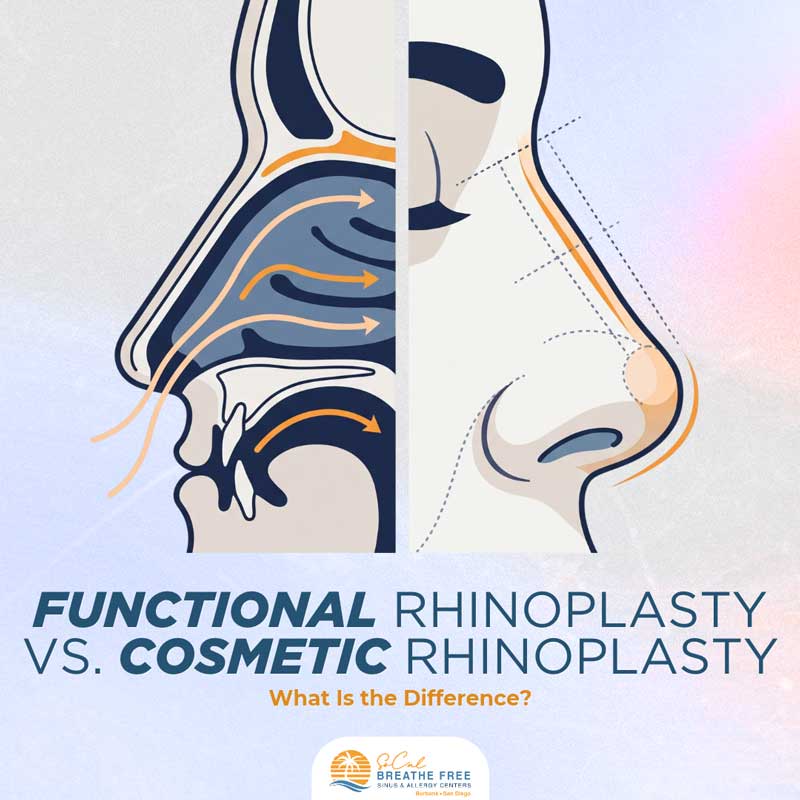
Functional rhinoplasty focuses on improving nasal breathing by correcting structural problems that restrict airflow. Cosmetic rhinoplasty focuses primarily on changing the outside appearance of the nose.
Although their goals differ, both procedures may involve reshaping nasal bones or cartilage. Some patients also undergo a combination of functional and cosmetic corrections to address breathing difficulties and appearance-related concerns during the same operation.
The appropriate approach depends on your nasal anatomy, symptoms, and treatment goals.
What Is Functional Rhinoplasty?
Functional rhinoplasty is a surgical procedure intended to improve how air moves through your nose.
Normally, the bones, cartilage, and surrounding tissues help keep your nasal passages open when you breathe. However, certain structural problems can make those passages narrower or less stable.
For example, you might notice that one nostril always feels blocked or that the side of your nose pulls inward whenever you take a deep breath.
These symptoms may occur because of a deviated septum, nasal valve collapse, previous injury, or another anatomical problem.
Functional rhinoplasty aims to correct structural issues contributing to the obstruction.
Depending on the patient’s anatomy, surgery may involve reshaping cartilage, reinforcing weak nasal structures, or making other adjustments to improve airflow.
The primary goal is better nasal function rather than a particular cosmetic result.
What Conditions Can Functional Rhinoplasty Address?
Several structural conditions may lead an ENT specialist to consider functional rhinoplasty.
Nasal Valve Collapse
The nasal valve is one of the narrowest areas of your nasal airway.
When the surrounding cartilage or sidewall becomes weak, part of the passage may narrow or collapse inward during inhalation.
This can make nasal breathing particularly difficult during exercise, sleep, or deep breathing.
Functional rhinoplasty may involve reinforcing the nasal sidewall or widening the affected area to improve airflow.
Deviated Septum
A deviated septum occurs when the wall separating your nasal passages bends significantly to one side.
In some cases, septoplasty alone may be sufficient to correct the obstruction.
However, patients with more complex deviations or additional structural problems may require a broader surgical approach.
Previous Nasal Injuries
A broken nose or other injury can affect both the internal airway and the external supporting structures.
If the injury leaves the nose crooked or weakens the nasal cartilage, functional rhinoplasty may be considered to help restore appropriate support and airflow.
Not everyone with these conditions needs surgery. An ENT evaluation is necessary to determine whether a structural problem is actually responsible for the symptoms.
What Is Cosmetic Rhinoplasty?
Cosmetic rhinoplasty focuses primarily on changing the nose’s external appearance.
Someone may consider the procedure because they’re unhappy with a particular feature or want to adjust the overall proportions of their nose.
Depending on the individual’s goals and anatomy, cosmetic rhinoplasty may involve:
- Reducing or reshaping a bump on the nasal bridge
- Adjusting the width or shape of the nose
- Refining the nasal tip
- Correcting visible asymmetry
- Changing the angle between the nose and upper lip
Unlike functional rhinoplasty, the main reason for cosmetic surgery is appearance rather than the correction of medically significant breathing difficulties.
However, any procedure that changes nasal structure must also consider its effect on airflow.
Reshaping the nose without preserving adequate structural support can potentially create or worsen breathing problems.
Functional Rhinoplasty vs. Cosmetic Rhinoplasty: How Do They Compare?
Although both procedures involve the nose, their main objectives differ.
| Feature | Functional Rhinoplasty | Cosmetic Rhinoplasty |
| Primary goal | Improve nasal breathing | Change nasal appearance |
| Main concerns | Airway obstruction and structural dysfunction | Shape, proportions, or symmetry |
| Structures treated | Nasal valves, supporting cartilage, and other airway structures | Nasal bones, cartilage, tip, or bridge |
| Possible appearance changes | May occur as part of structural correction | Usually intended |
| Insurance coverage | May qualify when medically necessary | Generally not covered when performed solely for cosmetic reasons |
The distinction isn’t always absolute. Some procedures address both breathing and appearance, and the same structural correction may affect both.
Can Functional Rhinoplasty Change How Your Nose Looks?
Yes. Functional rhinoplasty can sometimes change the outside appearance of your nose because improving airflow may require reshaping or reinforcing structures that also determine nasal shape.
For example, correcting a severely crooked nose after an injury may improve both its alignment and the space available for breathing.
However, visible changes aren’t always necessary, and improving appearance isn’t the primary purpose of functional surgery.
Your surgeon should explain whether the planned correction is expected to affect your nasal bridge, tip, or overall shape.
How Is Functional Rhinoplasty Different From Septoplasty?
Septoplasty and functional rhinoplasty are closely related, but they aren’t interchangeable.
Septoplasty focuses on straightening the nasal septum, the internal wall of bone and cartilage that separates the left and right nasal passages.
It’s generally performed through incisions inside the nose and isn’t intended to reshape the external nose.
Functional rhinoplasty can involve a broader range of structural corrections, particularly when the nasal valves or external supporting cartilage contribute to obstruction.
For example, someone with a deviated septum but otherwise stable nasal structures may benefit from septoplasty.
However, a patient with nasal valve collapse may need additional support that septoplasty alone cannot provide.
Understanding whether a deviated septum or nasal valve collapse is responsible for the obstruction helps determine which treatment may be appropriate.
Can Functional and Cosmetic Rhinoplasty Be Combined?
Yes. Some patients want to address breathing problems and appearance-related concerns at the same time.
In these situations, a surgeon may consider a combined approach that addresses both nasal function and external shape.
For example, someone who previously broke their nose might experience persistent difficulty breathing along with visible crookedness.
A combined procedure may be designed to improve airflow while also correcting aspects of the external deformity.
However, combining procedures isn’t necessary or appropriate for everyone.
The decision depends on the patient’s anatomy, overall health, treatment goals, and the surgeon’s assessment.
How Does an ENT Determine Which Procedure You Need?
A proper evaluation begins with understanding what concerns you most.
If breathing is your main problem, your ENT specialist will assess whether a structural issue is responsible.
Your provider may ask:
- Does one or both nostrils feel consistently blocked?
- Does breathing become harder during exercise or sleep?
- Have you experienced a previous nasal injury?
- Does your nose appear to collapse inward during inhalation?
- Have allergy medications or nasal sprays helped?
- Are you concerned about changes to your nose’s appearance?
Your provider may then examine the septum, turbinates, nasal valves, and external nasal structures.
Nasal endoscopy may be used when additional examination is needed.
A sinus CT isn’t routinely required to diagnose nasal valve collapse, since it doesn’t reliably show how the airway behaves during breathing.
At SoCal Breathe Free, functional rhinoplasty evaluations focus on how nasal structures affect airflow and whether structural correction may be appropriate.
Is Recovery Different for Functional and Cosmetic Rhinoplasty?
Both procedures involve healing of the nasal tissues, but recovery varies depending on the extent of surgery.
Patients may experience swelling, bruising, congestion, and discomfort during the initial recovery period.
When nasal bones or external cartilage are reshaped, visible swelling and bruising may be more noticeable.
Some people return to light daily activities within one to two weeks, although strenuous activity often needs to wait longer.
Breathing may temporarily feel more difficult because of postoperative swelling.
Although initial healing occurs over the first several weeks, swelling and tissue changes can continue for months. The final appearance and functional results may take longer to become apparent.
Your surgeon will explain the expected recovery process based on your specific procedure.
Is Functional Rhinoplasty Covered by Insurance?
Functional rhinoplasty may qualify for insurance coverage when it is medically necessary to correct documented nasal breathing problems.
However, coverage depends on the patient’s insurance plan, the procedure being performed, and the insurer’s medical necessity requirements.
Cosmetic rhinoplasty performed solely to change appearance is generally not covered.
If a procedure includes both functional and cosmetic components, the costs may be handled separately.
Patients should confirm coverage, authorization requirements, and potential out-of-pocket expenses before surgery.
Frequently Asked Questions
Can functional rhinoplasty improve breathing without changing my appearance?
Sometimes. Certain structural corrections may improve airflow with little noticeable change to the nose’s appearance. However, other procedures may require changes to external supporting structures.
Can cosmetic rhinoplasty also improve breathing?
It can, particularly when the surgical plan includes correction of a functional problem. However, cosmetic rhinoplasty isn’t automatically intended to treat nasal obstruction.
Does everyone with nasal valve collapse need functional rhinoplasty?
No. Some patients may benefit from nasal strips, dilators, or other treatment options. Surgery may be considered when structural obstruction causes significant symptoms and an appropriate correction is identified.
Is functional rhinoplasty the same as septorhinoplasty?
Not exactly. Functional rhinoplasty describes surgery primarily intended to improve nasal function. Septorhinoplasty specifically involves correction of the septum along with rhinoplasty techniques. The procedures may overlap.
Will functional rhinoplasty permanently fix my breathing problems?
Functional rhinoplasty may provide lasting improvement for appropriately selected patients, but results aren’t guaranteed. Allergies, inflammation, and other nasal conditions may continue to affect breathing after surgery.
Can I choose to have only functional correction?
In many cases, patients can focus on improving breathing without pursuing elective cosmetic changes. However, some medically necessary structural corrections may also affect appearance. Your surgeon can explain what is realistically possible.
Breathing Problems or Concerns About Nose Shape? Get Answers at SoCal Breathe Free!
Not everyone considering nasal surgery has the same goal. Some patients want to change how their nose looks, while others simply want to breathe more comfortably. Understanding the difference between functional and cosmetic rhinoplasty can help you ask the right questions and make informed decisions about your care.
At SoCal Breathe Free Sinus & Allergy Centers, our team evaluates nasal obstruction, deviated septums, nasal valve concerns, and other conditions that may interfere with breathing. With locations in Burbank and San Diego, we help Southern California patients understand whether medical management or structural nasal treatment may be appropriate.
If you’re experiencing persistent difficulty breathing through your nose, an evaluation can help identify the cause and clarify your options.